YourERPBudgetIsMissingaLineItem:YourPeople'sTime
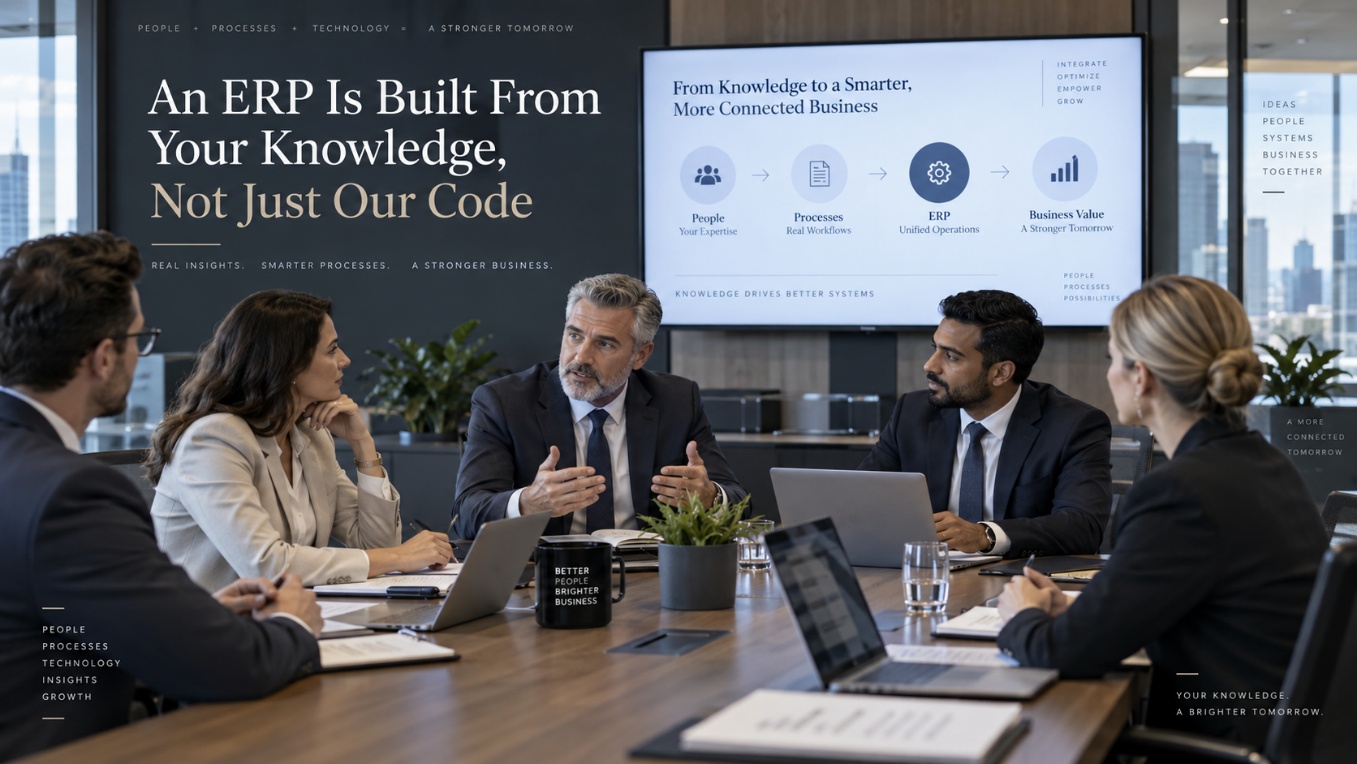
“Every ERP proposal has a clean commercial quote: licences, consulting, data migration, support. What none of them have is a line that reads ‘Hours your own managers must give to this project.’ Yet that missing line decides more ERP outcomes than any software feature.”
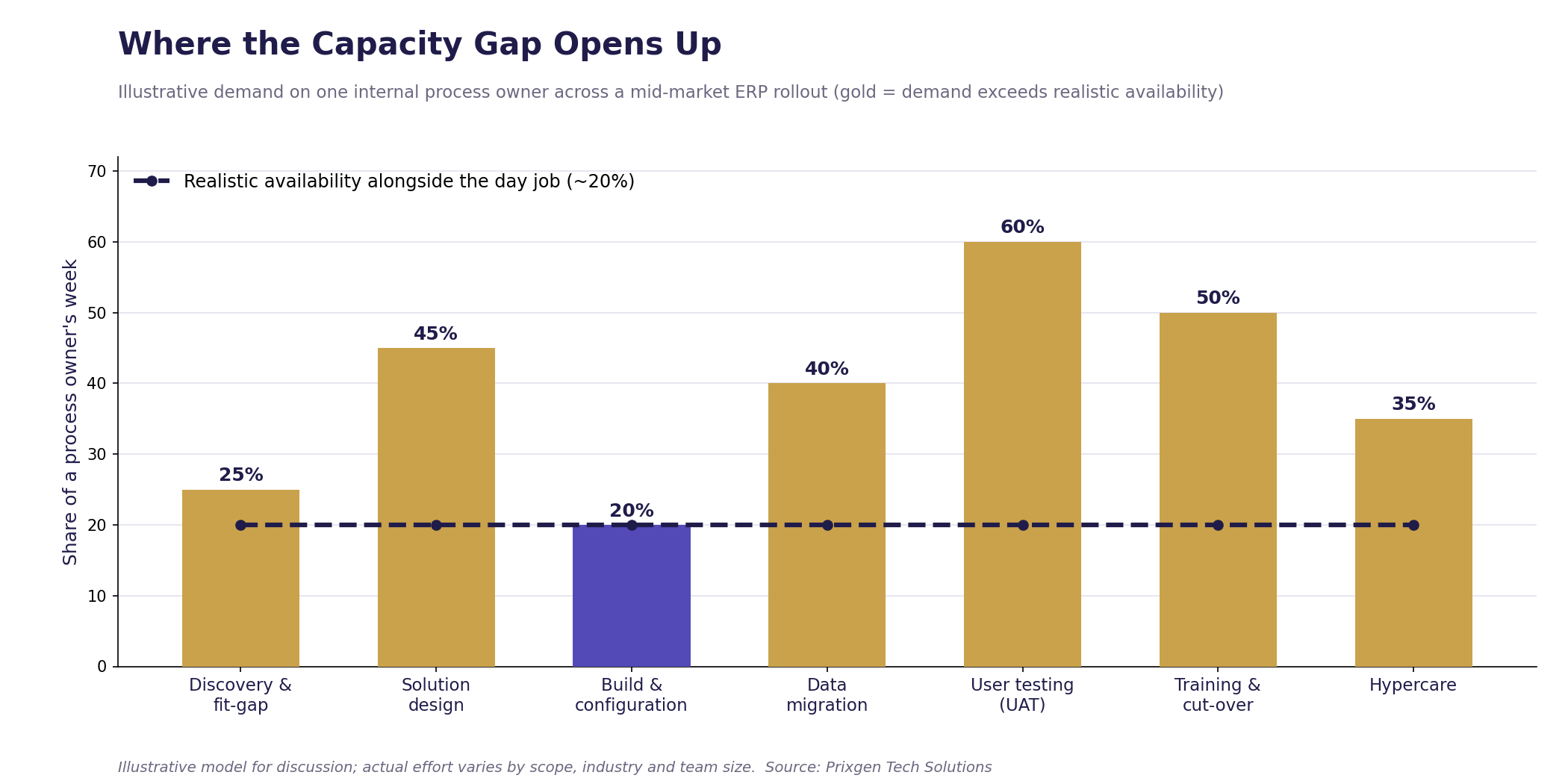
Where the Internal Team Capacity Gap Opens Up
2. Solution Design • Business process blueprints, custom logic sign-offs, edge-case definitions
The 5-Step Cascade: From Small Compromises to P&L Defects
Capacity problems never announce themselves loudly. They compound quietly through reasonable-sounding compromises until after go-live:
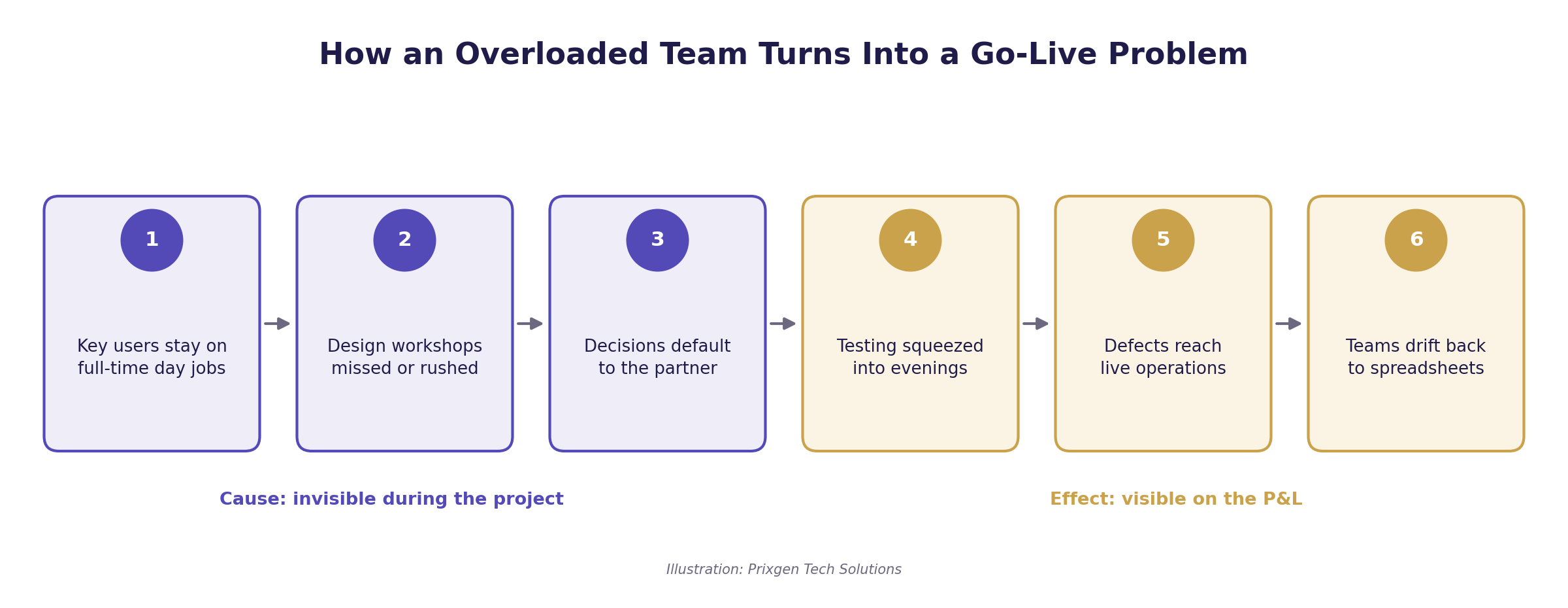
Workshops Lose Decision-Makers
Plant managers join for 15 mins; the finance head sends a junior. Needs are noted, but nobody with authority signs off.
Decisions Drift to Partner
When client teams can't decide, consultants make default choices. Good for a generic business, not for yours.
Testing Squeezed to Nights
UAT is done as overtime on happy-path data. Complex edge cases, scrap logs, and GST returns are skipped.
Defects Hit the P&L
After go-live, problems land where leadership looks: delayed invoices, wrong stock valuations, and missed dispatches.
Quiet Retreat to Excel
Users who didn't shape the software distrust it. Shadow spreadsheets return and ERP becomes an expensive data-entry tool.

Is Your Project Carrying Capacity Risk?
Select any warning signals currently present in your enterprise. If 3 or more are active, your implementation requires immediate executive intervention.
Absent Process Owners
The same senior department heads repeatedly cancel workshops or send junior delegates without sign-off authority.
Slow Design Sign-offs
Process blueprints and architecture specifications sit unapproved for 3+ weeks awaiting review.
Thin Test Evidence
UAT sheets are rubber-stamped with only 3–5 happy-path test runs and zero real-world edge cases.
Master Data Postponement
Item masters, vendor records, and bill-of-materials cleansing gets pushed phase after phase.
Clashing Enterprise Initiatives
Statutory audits, GST reconciliations, plant expansions, or new product launches happening in the same quarter.
Visible Change Fatigue
Middle management and operators respond with visible frustration: 'What system are we supposed to use now?'
The Prixgen Capacity Readiness Framework
Across 100+ ERP deployments, projects that went live on time shared one habit: capacity was planned as rigorously as software architecture. We run these 6 checks with every client:
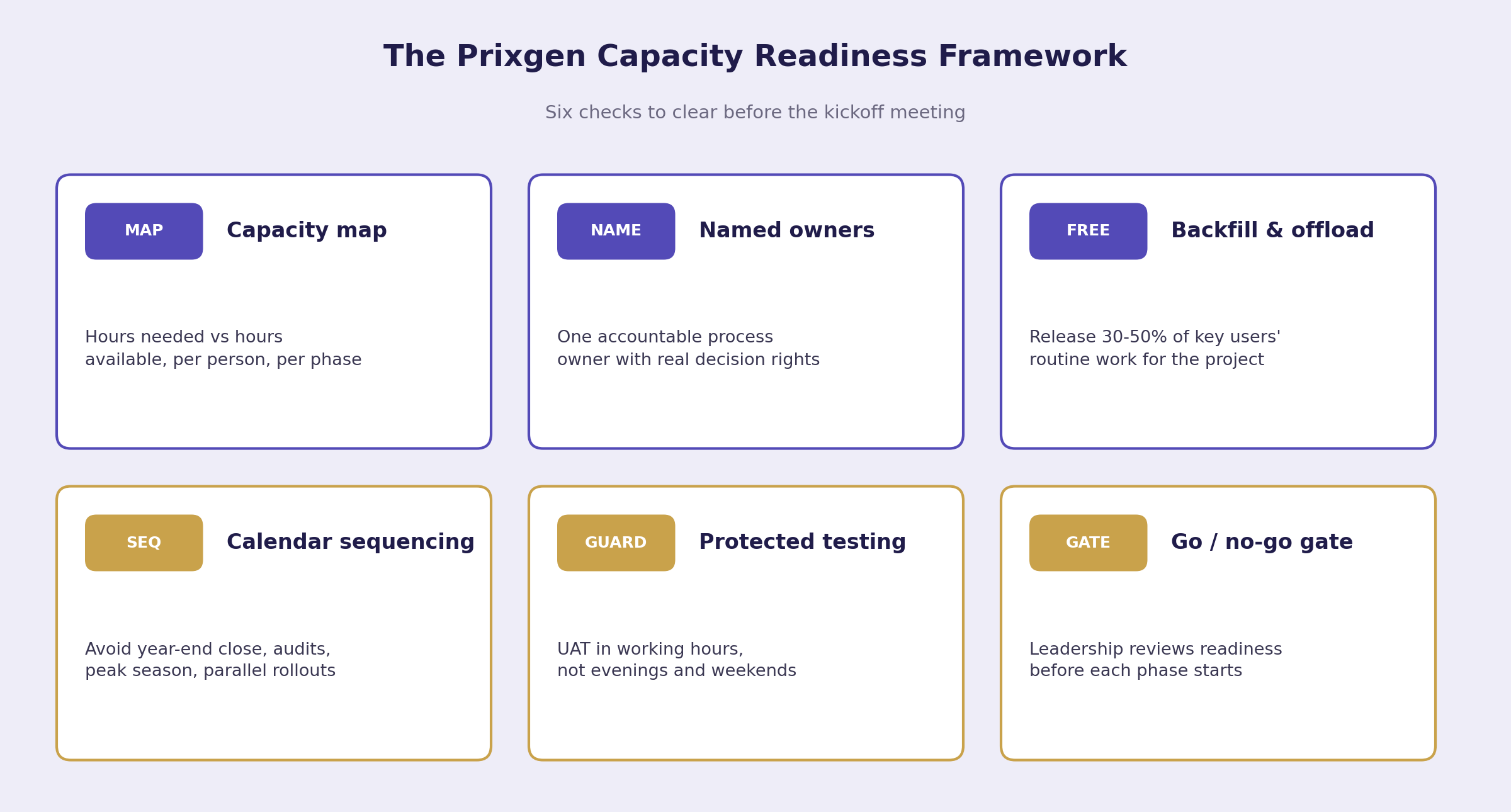
Build a Capacity Map Upfront
Map project hours vs realistic availability for every key user on a single page.
Estimate the exact hours required per role and phase (e.g. Finance Head: 18 hrs/wk in Month 2). Compare against actual spare capacity. The gaps become transparent, allowing the board to make resourcing choices before signing.
Name Owners with Real Decision Rights
One single accountable owner per process stream with full sign-off autonomy.
From Procure-to-Pay to Extrusion to Order-to-Cash, assign a single owner empowered to make definitive architectural calls. Consensus committees that escalate every toggle will paralyze implementation velocity.
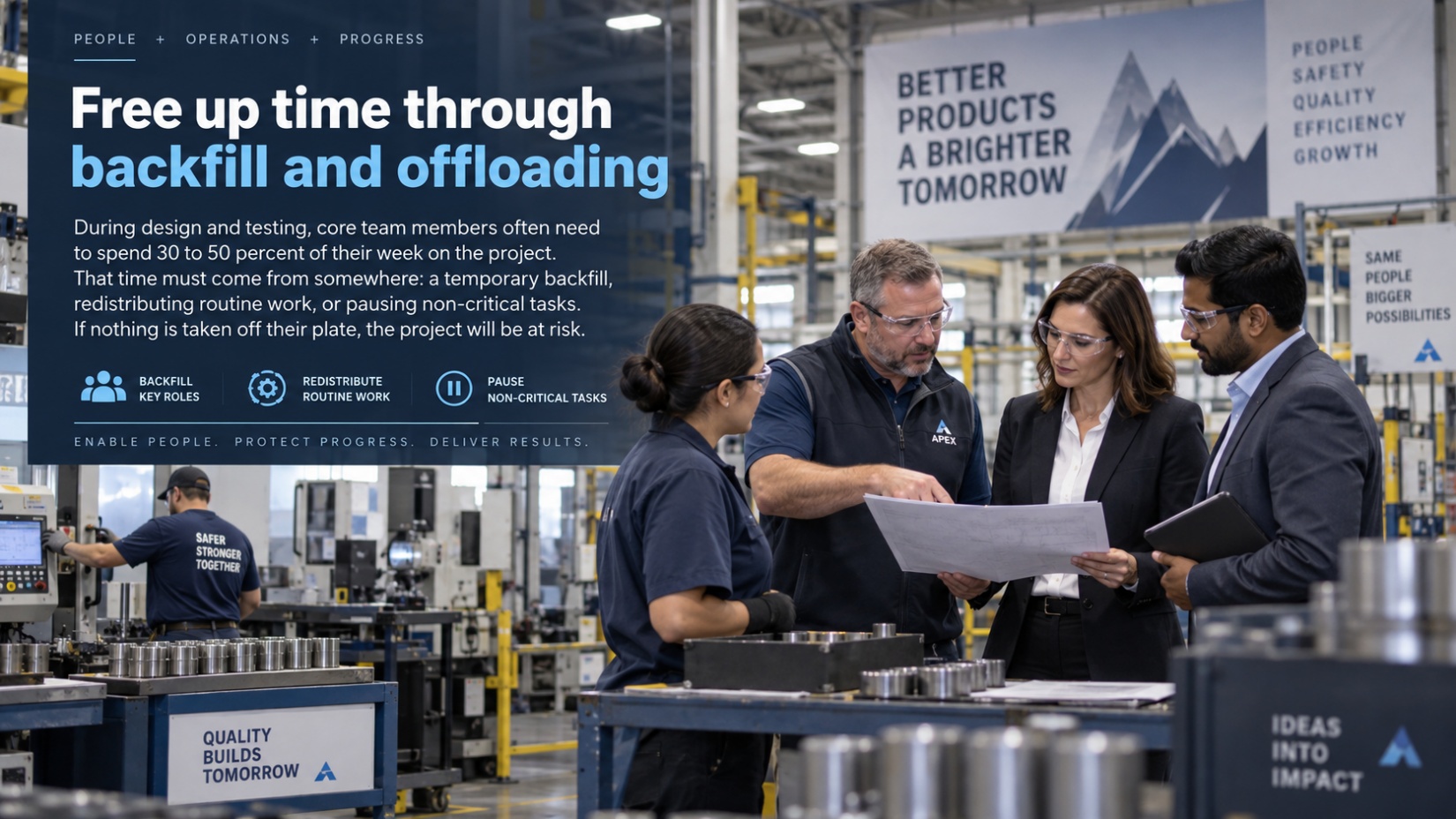
Free Up 30–50% Time via Backfill
Budget for temporary backfill and work offloading as legitimate project costs.
During Blueprint and UAT phases, core owners need 30% to 50% of their working week. Offload routine reconciliation, assign temporary coordinators, or pause non-critical projects. If nothing is taken off their plate, the ERP will be.
Sequence Around Business Peaks
Lock schedules away from March fiscal closing, GST filings, and peak seasonal demand.
Never schedule Blueprint sign-offs or Cutover during year-end statutory audits or peak dispatch months. Moving a project kickoff by 3 weeks costs zero; rescuing a derailed go-live costs millions.
Protect Testing in Normal Working Hours
Conduct UAT with dedicated calendar blocks, realistic data, and complex scenarios.
Testing conducted after hours catches superficial UI glitches and misses multi-department ledger misalignments. Block 4-hour dedicated daytime sprints with real operational scenarios.
Enforce Go / No-Go Capacity Gates
Before transitioning to the next phase, verify internal team availability.
Leadership must ask one plain question before Design, Build, and Go-Live: 'Are our people genuinely ready and available for this next phase?' If not, phase the scope or pause. Starting with an unavailable team always finishes late.
What Leadership Should Do This Quarter
5 low-cost executive actions that dramatically improve ERP success odds:
Ask your implementation partner to quote client-side hours by role and phase—not just their own consultant rates.
List every major corporate initiative planned for the next 12 months and verify which key people appear in more than one.
Document in writing what your core process owners will delegate, postpone, or halt during Blueprint & Testing.
Treat temporary backfill salaries as legitimate project expenses, alongside software licences and partner fees.
Make ERP milestone delivery a formal part of key users' annual review goals so project effort is rewarded, not squeezed.
If capacity is tight, a phased rollout (Finance & Inventory first, then Manufacturing) is far wiser than high-risk big-bang releases.
How Prixgen Protects Clients from Capacity Risk
Internal Effort Upfront
Our proposals explicitly project expected client-side hours by department, so leadership can resource appropriately before signing.
100% In-House Payroll
We never subcontract functional or technical delivery. Our dedicated consultants maintain accountability and team continuity.
Chartered Accountants In-House
Qualified finance consultants shoulder complex tax, GST, and closing design, relieving pressure on your internal accounting teams.
Readiness Gate Governance
Every phase begins with an honest readiness checkpoint. We will advise a phased schedule whenever it protects the client's outcome.
Frequently Asked Questions on ERP Resourcing
Planning an Odoo, Business Central, or SAP Initiative?
Prixgen's senior enterprise consultants can help you run a Capacity Readiness Assessment before committing to budget and go-live dates.